I CAN HARDLY WAIT TO DIE FOR CHRIST or Allah! (Conclusion)

(As you can see, it does not pay to take verses out of their context).
Paul was not saying, “hey let’s all go out and put ourselves in a dangerous place where we could to get killed, cuz, hey, then we will be with Christ!” What he was saying was that he himself was torn between wanting, desiring for the gathering together to be with Christ and continuing to do what he was doing, for their sake; not that he or us has any control over the return anyway. Paul goes on to say:
Phil 1:23 But I am pressed by both, having the desire for (the) departure and being with Christ, [for] [it is] very much better, Darby
More of the context of Philippians: Phil 2:16 Holding forth the word of life; that I may rejoice in the day of Christ, that I have not run in vain, neither laboured in vain. KJV
Paul goes on to say in Phil 3:7 But what things were gain to me, those I counted loss for Christ. KJV
Phil 3:10-11 That I may know him, and the power of his ability to raise the dead, and the fellowship of his sufferings, being made conformable unto his death; If by any means I might attain unto the rising from the dead. AT
Phil 3:20-21 for our commonwealth has its existence in [the] heavens, from which also we await the Lord Jesus Christ [as] Saviour, who shall transform our body of humiliation into conformity to his body of glory, according to the working of [the] power which he has even to subdue all things to himself. Darby
2 Thess 2:3 Let no one deceive you in any way. For it (the day of the Lord) will not be, unless the departure comes first, and the man of sin is revealed, the son of destruction, WEB
Death is an enemy and will be an enemy until it is destroyed: 1 Cor 15:26 The last enemy that shall be destroyed is death. KJV
Do you remember that Paul said in 1 Thess 4:13-17 that the dead are sleeping in Christ? Where are they sleeping? In Sheol, the grave. This is where the apostle Paul is now, and Peter and David and Moses as well as everyone who has ever lived and died, except Jesus Christ. Some are awaiting the Gathering Together of the Church of God, the Body of Christ; others are awaiting the Resurrection of the Just, some the Unjust and still others have no idea that they are waiting for anything. But, the fact remains, that they are dead and don’t even know it. Anyone who was ever any good for God, who are dead, are no longer. Death will find us all soon enough without us going out looking for it!
Eccl 9:10
Whatever your hand finds to do, verily, do it with all your might; for there is no activity or planning or knowledge or wisdom in Sheol where you are going. NASB
I CAN HARDLY WAIT TO DIE FOR CHRIST or Allah! (Part II)

Part II of …..DYING FOR CHRIST or Allah
Phil 1:23
For I am in a strait betwixt two, having a desire to depart, and to be with Christ; which is far better:
Webster
23 But I am pressed by both, having the desire for (the) departure and being with Christ, [for] [it is] very much better,
Darby
The following is taken from Adam Clarke’s Commentary, Electronic Database. Copyright © 1996, 2003, 2005, 2006 by Biblesoft, Inc. All rights reserved:
[For I am in a strait betwixt two] Namely, the dying now, and being immediately (in a sense of time at the Rapture) with Jesus; or living longer to preach and spread the Gospel, and thus glorify Christ among men. ( if I died right now. the next thing I would be aware of is the Rapture!)
[Having a desire to depart, and to be with Christ] Teen epithumian echoon eis to analusai. It appears to be a metaphor taken from the commander of a vessel, in a foreign port, who feels a strong desire analusai, to set sail, and get to his own country and family; but this desire is counterbalanced by a conviction that the general interests of the voyage may be best answered by his longer stay in the port where his vessel now rides; for he is not in dock, he is not aground, but rides at anchor in the port, and may any hour weigh and be gone. Such was the condition of the apostle: he was not at home, but although he was abroad it was on his employer’s business; he wishes to return, and is cleared out and ready to set sail, but he has not received his last orders from his owner, and whatever desire he may feel to be at home he will faithfully wait until his final orders arrive. (Nicely put, eh?)
The word depart, analusai, is only used in one other place in the Bible in Luke 12:36 in regards to Christ’s return, specifically his 2nd Coming for Israel:
36 And ye yourselves like unto men that wait for their lord, when he will return from the wedding; that when he cometh and knocketh, they may open unto him immediately.
KJV
1 Thess 4:13-17 But we do not want you to be uninformed, brethren, about those who are asleep (dead), that you may not grieve, as do the rest who have no hope. 14 For if we believe that Jesus died and rose again, even so God will bring with Him those who have fallen asleep in Jesus. For this we say to you by the word of the Lord, that we who are alive, and remain until the coming of the Lord, shall not precede those who have fallen asleep (the dead). 16 For the Lord Himself will descend from heaven with a shout, with the voice of the archangel, and with the trumpet of God; and the dead in Christ shall rise first. NASB
God can’t bring anyone with Jesus back to heaven, if everyone is already there! Come on people, the Bible has to make sense. There is no life immediately after death; there is no transmigration of the soul. (I’m not sure this knowledge would make any difference to the Islamo-facists group called ISIS, but it should). When Jesus drew his last breath, BAM he was dead! His soul no longer existed anywhere; no breath = no life. Anyone teaching anything contrary to this is in error. Every mortal who has ever lived and died with the exception of Jesus Christ is Resting in Peace.
R.I.P.
(TBC)
I CAN HARDLY WAIT TO DIE FOR CHRIST or Allah! (PART I)

In light of the many recent be-headings and murders of Christians by radicalized Muslims or Islamic Extremists, some in the Church are teaching that if you are in the place God wants you to be and this happens to you, then it is “gain,” because even Paul said it was better to be with Christ than to be ministering here on earth or so it is taught. Who really benefits when a Christian dies? Both Muslims and Christians hold the erroneous belief in life immediately after death. I think there would far fewer suicide bombers if they knew the truth.
Paul said in Phil 1:21 “For to me to live is Christ, and to die is gain.” When we look at this verse as it stands alone it leaves us with the impression that death is something to be gained, yet we know that death is and always will be an enemy; the greatest enemy of life. No one gains anything by being dead; not God, not Jesus and certainly not you. In order to “gain” a proper understanding of the preceding verse it must be seen in its context. In its context we must go back and read from the beginning of the chapter to the end of the Epistle. In verse 6 we read:
Phil 1:6 Being confident of this very thing, that he which hath begun a good work in you will perform it until the day of Jesus Christ:
Phil 1:10 That ye may approve things that are excellent; that ye may be sincere and without offence till the day of Christ;
Phil 1:20 According to my earnest expectation and my hope, that in nothing I shall be ashamed, but that with all boldness, as always, so now also Christ shall be magnified in my body, whether it be by life, or by death.
We can see that the context preceding verse 21 is “the day of Jesus Christ” when he returns to gather us together to heaven. This was Paul’s earnest expectation and hope and should be ours as well. The words “earnest expectation,” is the Greek word apokaradokia, to watch with intense anticipation, and is used in one other place in regards to the creation:
Rom 8:18-19 For I consider that the sufferings of this present time are not worthy to be compared with the glory which shall be revealed in us. 19 For the earnest expectation of the creation eagerly waits for the revealing of the sons of God. NKJV
When are the sons of God revealed? When they/we return with Jesus for the Battle of Armageddon.
The second word Paul uses in conjunction with earnest expectation is his “hope,” elpis. Hope is often associated with the return of Jesus Christ:
Col 1:5 because of the hope laid up for you in heaven, NASB
1 Thess 2:19-20 For who is our hope or joy or crown of exultation? Is it not even you, in the presence of our Lord Jesus at His coming? 20 For you are our glory and joy. NASB
Phil 1:23
For I am in a strait betwixt two, having a desire to depart, and to be with Christ; which is far better:
Webster
(TBC, see Part II)
Part IV of the Apocalupsis of John, the Book called Revelation
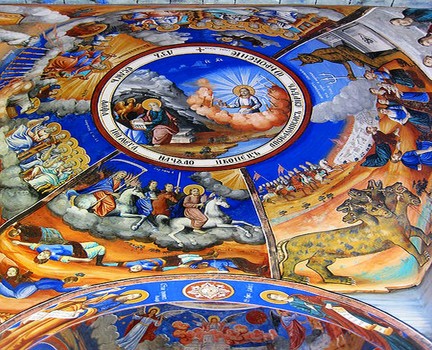
In the preceding 3 posts I have established beyond any doubt that the miscalled “churches” in The Apocalupsis of John are in reality assemblies or congregations of Jews, members of the Nation of Israel. To give you an example of how unsound some believers can be, a woman, whose blog I used to follow, said to me, “If Jesus called them churches, then that’s what they are!” Unfortunately Jesus has had nothing to do with how translators have chosen to translate most of the words in the Bible. Out of 17 Bible versions or translations in my PC Bible program only these 3 translate ecclesia properly:
Rev 1:4
John to the seven assemblies that [are] in Asia:
YLT- Young’s Literal Translation
Rev 1:4
4 John to the seven assemblies
Darby
Rev 1:4
4 John, to the seven assemblies that are in Asia:
WEB- World English Bible
If you are a serious workman of the Word or want to be you must invest in some PC Bible program or buy a lot of Bibles! On my way home from NY last Sunday by way of Chicago I had the opportunity to sit next to a young Jewish girl who had recently become a Christian. She was very well versed in the “mainstream” doctrines of Christianity. She was surprised to hear many things I had to say about beliefs she held and took a copious amount of notes on her phone. I was able to show her from the Scriptures (on her phone) passages which substantiated what I had to say, but she could not find one Scripture to substantiate anything she believed! Everything she believed hear-say and much of that was heresy!
She was even astonished to see from 1 Corinthians 10:32 that the apostle Paul established that there are only 3 types of people in the world; Jews, Gentiles and the Church of God. She was equally surprised to see these verses:
Gal 3:28-29
There is neither Jew nor Greek, there is neither bond nor free, there is neither male nor female: for ye are all one in Christ Jesus.
29 And if ye be Christ’s, then are ye Abraham’s seed, and heirs according to the promise.
KJV
She was insisting that she was a Jew for Jesus. What an absurd belief. I tried to explain to her that once a Jew or a Gentile became born again of the spirit of God by confessing Jesus as their Lord and believing God raised him from the dead, they became members of the Church of God. She could not let go of her ancestry and she could not understand how I could be of the seed of Abraham. She really imploded when I told her that Abraham was a Gentile and not a Jew!
Abram is first mentioned in Ge. 11:26; his name was changed to Abraham in Ge. 17:5. Jacob isn’t mentioned until Ge. 25:26 and his name was not changed to Israel until Ge. 32:28. The word Jew is not mentioned until the book of Esther and then it applied to a descendant of Judah. Abraham is called a Hebrew in Ge. 14:13 which means a descendant of Eber. Eber is first mentioned in Ge. 10:21. Eber lived 464 years; see Ge. 11:16.
I could go on and on, but the point you need to see is that the word Hebrew had nothing to do with Jews or Israel originally; that Israel did not exist in Ge. 11. Therefore Abraham could not have been a Jew, but rather a Gentile.
The most astonishing thing that this young Jew for Jesus had to say to me was that no one could be a Christian or a member of the Church of God without confessing and believing that Jesus was God incarnate. I asked where she got this from in the Scriptures and she did not know precisely. I showed her Romans 10:9 where it says to confess Jesus as Lord which she said means God, because God is the “Lord” God. I proceeded to show here in Acts 2:36 that God had bestowed His title as Lord upon Jesus. Jesus is my Lord, my master. Nowhere in the Pauline Epistles does it talk about the Lord God or the Lord our God. They show God as our Father and Jesus Christ as our Lord! Lord is used 241 times in the Epistles which are written directly to the Church of God and never is the title attached to God!
To the Jew God will always be the Lord; but to the Christian, Jesus is our Lord, not our God. Here is what Lord means, in case it is not clear yet:
NT:2962 kurios, kuriou, ho
he to whom a person or thing belongs, about which he has the power of deciding; master, lord
a. used universally, of the possessor and disposer of a thing, the owner Matt 20:8
b. kurios
is a title of honor, expressive of respect and reverence, with which servants salute their master, Matt 13:27; 25:20,22; Luke 13:8; 14:22, etc.;
c. this title is given:
to God, the ruler of the universe Matt 1:22 (OT, Gospels and Revelation)
to the Messiah; and that:
to the Messiah regarded universally: Luke 1:43
to Jesus as the Messiah, Acts 10:36
d. of Christ (In the Epistles)
(from Thayer’s Greek Lexicon, Electronic Database. Copyright © 2000, 2003, 2006 by Biblesoft, Inc. All rights reserved.)
Don’t be afraid to comment; I will not delete any comments but will publish all.
(More on Revelation in the next post).
A BRIEF OVERVIEW OF (THE APOCALYPSE OF JESUS CHRIST) BOOK OF REVELATION, Part III
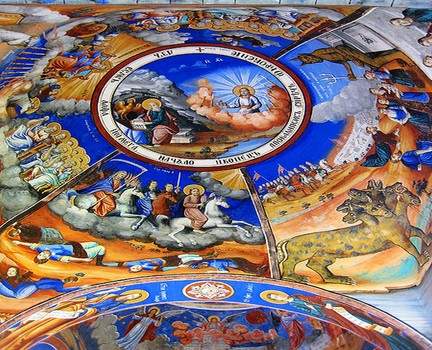
The following is copied from Bullinger, E.W. (2011-08-21). The Apocalypse or “The Day of The Lord”: Commentary on Revelation (Kindle Locations 402-404, 414-421). Trumpet Press. Kindle Edition.
THE CHURCH NOT THE SUBJECT OF OLD TESTAMENT PROPHECY.
“Closely connected with this foregoing point, that the book (revelation) is Hebrew in character, and intended specially for Hebrews, is another undoubted fact, that the Church of God is not the subject of the Old Testament , either in history, type, or prophecy. Passages, etc., may be found there and used to illustrate what is subsequently revealed. But this can be done only by way of application, and not by way of teaching or of interpretation. Because, of the “Mystery” or the secret concerning the Church of God, we are told that it “was kept secret since the world began” (Rom. xvi. 25). That “in other ages it was not made known unto the sons of men” (Eph. iii. 5). That is, “from the beginning of the world, hath been hid in God” (Eph. iii. 9). That it “hath been hid from ages and from generations, but now is made manifest to the saints” (Col. i. 26). These statements are “the true sayings of God,” and not our own. We have no choice but to believe what He says. If any hold that, in spite of all this, the Church was not “hid in God,” but was the subject of Old Testament prophecy, then we have nothing more to say to them; for, if they will not believe God, it is not likely they will believe us.
But, believing God, we ask whether the Church is likely to be the subject of prophecy in the Apocalypse, especially when its future is clearly foretold in the Epistles which contain the revelation of the Secret. There we learn what is to be the future and end of the Body of Christ. The members of that Body are merely waiting to be “received up in glory” (1 Tim. iii. 16). They are waiting for their “calling on high” (Phil. iii. 14). They are looking for the Saviour, the Lord Jesus Christ, who shall change their vile bodies that they may be fashioned like unto His own glorious body (Phil. iii. 20, 21). But all this, we submit, takes place before the Apocalypse opens. There we have, not the coming of the Lord to take away His Church, but, the revelation of the events which shall take place after the Church has been “received up in glory.” These events will take place during “the day of the LORD,” when He shall come not in grace, but in judgement; not in mercy, but in wrath. But this brings us to our fourth point. What is the meaning of “the Lord’s Day,” in chap. i. 9?”–end quote
How could this be, you might ask? It’s really quite simple.When we choose to believe Romans 16:25, Ephesians 3:5, 9 and Colossians 1:26–-that this day and age in which we currently live was kept secret by God from everyone, from every preceding prophet—how could there be any prophecies concerning this time? There cannot be and there is not.one single Old Testament prophecy, which includes the 4 Gospels, that concerns the Church of God which no one prior knew anything about. As Mr. Bullinger says in the last sentence of the 1st paragraph, if you won’t believe what God said in the Epistles about the Secret, you more than likely will not believe me!
God bless!
A BRIEF OVERVIEW OF (THE APOCALYPSE OF JESUS CHRIST) BOOK OF REVELATION, Part II
Now we will examine the Greek word Ecclesia in greater detail:
THE SEVEN ASSEMBLIES AS A WHOLE (i. 11).
(Taken from Bullinger, E.W. (2011-08-21). The Apocalypse or “The Day of The Lord”: Commentary on Revelation , Trumpet Press. Kindle Edition).
We must here, at the outset, remove the greatest source of all the misunderstandings which have arisen with regard to these seven “churches.” The fact of their being called “churches” has naturally led commentators and students of this book to infer that it is the Church of God, or at any rate the historic Christian Church, which is meant. As a first step toward removing this great evil, let us note at once that the word (…) (ecclesia), rendered “church,” is by no means limited to the restricted sense which is thus forced upon it.
Ecclesia means simply an Assembly: any assembly of people who are called out (for that is the etymological meaning of the word) from other people. Hence, it is used of the whole nation of Israel as distinct from other nations. The Greek word Ecclesia occurs seventy-five times in the Septuagint Translation of the Old Testament, and is used as the rendering of five different Hebrew words. As it is used to represent one of these, seventy times, we need not concern ourselves with the other four words. This Hebrew word is (…) (Cahal), from which we have our English word call. It means to call together, to assemble, or gather together, and is used of any assembly gathered together for any purpose. This Hebrew word Cahal occurs 123 times, and is rendered: “congregation ,” 86 times; “assembly,” 17; “company,” 17; and “multitude,” 3 times: but is never rendered “church.”
Its first occurrence is in Gen. xxviii. 3 – “that thou mayest be a multitude (margin, assembly) of people,” i.e ., a called-out people. That is what Israel was, a people called out and assembled from all other peoples. In Gen. xlix. 6 we read – “O my soul, come not thou into their secret ( Council or Senate); Unto their assembly (cahal), mine honour, be not thou united.” Here the word cahal is used, not of all Israel as called out from the nations, but of the assembly of those called out of form the Tribal Assembly (or Council) of the tribes of Simeon and Levi. Then, it is used of the worshippers, or those called out from Israel, and assembled before the Tabernacle and Temple, and in this sense is usually rendered “congregation.” This is the meaning of the word in Ps. xxii. 22: “In the midst of the congregation will I praise Thee;” and verse 25: “My praise shall be of Thee in the great congregation.”
We ought to use the word Ecclesia in the sense in which it is here used; and not, surely, in the newer and special sense which it acquired, and in which it is used, in the Epistles. In the Pauline Epistles we read nothing about an “angel” as having to do with the churches of God which Paul planted. When the word Ecclesia, in the Apocalypse is rendered “Church,” and the word “Synagogue” in Rev. ii. 9 and iii. 9, is interpreted of the church, it is playing fast and loose with the “words which the Holy Ghost speaketh,” and which He (God) has employed, not only for His revelation, but for our instructions. We hold that the Apocalypse contains a record (by vision and prophecy) of the events which shall happen “hereafter” in the Day of the Lord; that the whole book is concerned with the Jew, the Gentile, and the Earth, but not with the Church of God, or with Christendom; or with the latter only so far as the present corruption of Christianity ……after the Church, the Body of Christ, shall have been removed.
A BRIEF OVERVIEW OF (THE APOCALYPSE OF JESUS CHRIST) BOOK OF REVELATION, Part I
It is interesting to me to notice that the KJV, NRSV and NASB entitle this “book” as “The Revelation to John,” while the NIV entitles it merely “Revelation.” I would have have entitled it “The Revelation of Jesus Christ to Israel and the Gentile Nations.” “Why'” you say? Well, let us look at how it is written and “to whom” it is written:
Rev 1:1-2
The Revelation of Jesus Christ, which God gave Him to show to His bond-servants, the things which must shortly take place; and He sent and communicated it by His angel to His bond-servant John, 2 who bore witness to the word of God and to the testimony of Jesus Christ, even to all that he saw.
NASB
If you have been reading any of my posts you know that God has a reason for what He says, why He says it and to whom He says it. He does not use words loosely or carelessly. What we see here is that God gave this revelation, apokalupsis, (noun, a disclosure of truth, instruction, concerning divine things before unknown) to Jesus Christ who sent and relayed it by His angel to His bond-servant John.
Rev 1:3 3
Blessed is he that readeth, and they that hear the words of this prophecy, and keep those things which are written therein: for the time is at hand.
KJV
The words of this prophecy are just that, prophetic, things that will come to pass in the future. Preterists believe that this prophecy came to pass in 70 A.D. Futurists like myself and Fred Price Jr. believe it is still future. Time is the word kairos and means a fixed and definite time: the time occupied by what is written, i.e., the Coming of the Day of the Lord; the days of the wrath of our God. At the culmination of which, we, the born again believers of this Age, will return with Christ for the Battle of Armagedon.
Rev 1:4a
John to the seven assemblies that [are] in Asia:
YLT
Young’s Literal Translation properly translates ekklesias as assemblies, not churches. These 7 assemblies have nothing to do with the Church of God to which all born again believers belong, the Body of Christ.
Rev 1:4b
Grace be unto you, and peace, from him which is, and which was, and which is to come;
KJV
Here we have an undoubted reference to, and paraphrase of, the name of Jehovah, as revealed in Ex. iii. 14. It is not from the Father to His children, as in the Church Epistles ; but it is from Jehovah as He was revealed and made known to Israel. This is in perfect keeping with what we hold to be the scope of the book. Three times we have this periphrasis of Jehovah, and yet it is varied according to the emphasis we are to place upon it. Bullinger, E.W. (2011-08-21). The Apocalypse or “The Day of The Lord”: Commentary on Revelation (Kindle Locations 2486-2490). Trumpet Press. Kindle Edition.
Rev 1:4
and from the seven spirits which are before his throne;
KJV
We see from Rev 8:2 that these seven spirits are angels and more than likely the angels of the 7 assemblies as well: “And I saw the seven angels which stood before God; and to them were given seven trumpets.” KJV Rev 1:20 The mystery of the seven stars which thou sawest in my right hand, and the seven golden candlesticks. The seven stars are the angels of the seven churches: and the seven candlesticks which thou sawest are the seven churches. KJV
Rev 1:5-6
And from Jesus Christ, who is the faithful witness, and the first begotten of the dead, and the prince of the kings of the earth. Unto him that loved us, and washed us from our sins in his own blood,
6 And hath made us kings and priests unto God and his Father; to him be glory and dominion for ever and ever. Amen.
KJV
Grace and peace are given from the Old Testament reference to YHWH, the 7 angels who stand before Him and from Jesus Christ. As we go further in this spoken and written prophecy, we will see beyond a shadow of a doubt that the Church to which you and I belong will be long gone before the unfolding of the Great and Terrible Day of the LORD!
THE PROPHETIC AND PROLEPTIC NATURE OF THE GOSPEL OF JOHN
This following will be taken from a book written by friends of mine called One God, One Lord. I am using it to help us understand how John wrote his gospel. The 4 Gospels depict Christ as a man, a servant, a king and in John as the son of God.
“The Gospel of John in many respects paints a portrait of Jesus has already glorified even before his resurrection. In John the glory to Jesus as Messiah is pictured as a present reality not a future one as in the other three Gospels. The projecting of his post-resurrection glory back onto the past is accomplished through the figures speech prolepsis, which is an anticipating; especially describing of an event is taking place before it could have done so, the treating of a future of event as if it had already happened.
It is not surprising that this bold proleptic picture of Christ could be misunderstood and taken literally, thus breaking down the literal, historical and crucial importance of the resurrection. The resurrection becomes devalued by the assertion of Jesus’ apparent innate glory as a pre-existent divine being.
Figures of speech are legitimate literary devices employed to give vigor and emphasis to verbal communication. In addition to prolepsis John employs a related figure of speech called heterosis, which is the exchange of one verb tense for another, in this case, the present for the future tense.
The Gospel of John, therefore, is a profoundly profoundly literary portrait of the Messiah that is emphasizing his post-resurrection glorification at the right hand of God. It goes beyond being prophetic (i.e., foretelling of his future glory) and becomes proleptic by portraying him already glorious. The use of these figures of speech heterosis and prolepsis is not incidental and occasional–is the very warp and woof of the tapestry of John’s Gospel.
Misunderstanding figurative language accounts for many misconceptions because Our Western minds assume that we understand what seems to be the plain meaning of language. The perspective from which the Gospel of John is written is actually “Back From The Future.” There has been a major disturbance of biblical “time-space continuum,” and it is caused by proleptic nature of the Gospel of John.
More evidence that John’s view is proleptic is the fact that John has no record of Jesus’ temptation by the Devil or his agony in the Garden of Gethsemane. The risen Lord is beyond such temptation and to struggle in the flesh with an assignment from God is unthinkable. The essence of what Jesus is doing in the Gospel of John is looking down upon his earthly life and reinterpreting it in light of his exalted position at the right hand of God.
This prophetic and proleptic nature of the Gospel of John is made even clearer from the many other verses that attribute to Christ functions and qualities that properly belong to God, which will actually be delegated to him after his resurrection. The Jesus in John is already at the right hand of God, invested with all authority.”
A LEGACY OF ERROR, Part I
What is it you want to be remembered for? What do you want your legacy to be? Do you want to be remembered like Hymenaeus and Philetus? (2Ti 2:17) Or Ananias and Sapphira? (Acts 5:1) Of course not, right? Better yet, do you want to get to the Judgment Seat of Christ only to find out that what you believed your entire Christian life and taught others as well, was wrong? No, you don’t want that either. But, this is in fact the legacy a great many Christians will leave, including some of the most notable names there are.
Jesus taught his disciples to pray in Mt 6:10 ‘Thy kingdom come, thy will be done, On earth as it is in heaven.’
This prayer has gone unanswered to this day. The Kingdom has not come and God’s will is not being done on earth as it is in heaven, yet most Christians behave, act and teach as if it it is here already. There are many reasons for this, but one of the most obvious is the division of Bibles into the Old and New Testament, or Old and New Covenants. Since to Old Covenant is still in place, there can’t be a new one, yet.
Heb 8:8-12
8 For finding fault with them, He says,
“Behold, days are coming, says the Lord,
When I WILL effect a new covenant
With the house of Israel and with the house of Judah;
9 Not like the covenant which I made with their fathers
On the day when I took them by the hand
To lead them out of the land of Egypt;
For they did not continue in My covenant,
And I did not care for them, says the Lord.
10 “For this is the covenant that I WILL make with the house of Israel
After those days (THE DAYS OF VENGEANCE), says the Lord:
I will put My laws into their minds,
And I will write them upon their hearts.
And I will be their God,
And they shall be My people.
11 “And they shall not teach everyone his fellow citizen,
And everyone his brother, saying, ‘Know the Lord,’
For all shall know Me,
From the least to the greatest of them.
12 “For I will be merciful to their iniquities,
And I will remember their sins no more.”
NASB
All these “I WILL’s” are future and they are with Israel and Judah, not the Church of the Body of Christ. Now let’s look at Hebrews 8:13: When He said, “A new covenant,” He has made the first obsolete. But whatever is becoming obsolete and growing old is ready to disappear. NASB Becoming, growing and ready are active, ongoing; they are not something of the past.
Just like capitalization and punctuation are not “written in stone,” neither is how the Word of God is divided. The Book of Acts should serve as the Fulcrum between the Hebrew Prophets and the Christian Prophets. Jesus verily preached the the Kingdom was at hand, because he didn’t know about the Secret God kept hidden from the Hebrew Prophets (Ro. 16:25, Eph. 3:3).
placement of the gospels of Mt, Mk, Lk and Jn in the New Testament, when they should have been placed in the Old.
Here are some examples of what Jesus did not know about the coming kingdom::
Matt 16:28
“Truly I say to you, there are some of those who are standing here who shall not taste death until they see the Son of Man coming in His kingdom.”
Matt 26:64
Jesus saith unto him, Thou hast said: nevertheless I say unto you, Hereafter shall ye see the Son of man sitting on the right hand of power, and coming in the clouds of heaven.
Mark 14:61-62
But he held his peace, and answered nothing. Again the high priest asked him, and said unto him, Art thou the Christ, the Son of the Blessed? 62 And Jesus said, I am: and ye shall see the Son of man sitting on the right hand of power, and coming in the clouds of heaven.
Even though Jesus, the monogenetic Son of God, said these things, all the people to whom he said it, died, without them seeing what he said they would see. How can this be? How can you not have questions about it?
Preterists believe and teach that it did come to pass, just as Jesus said it would, but that Jesus’ return in the clouds was spiritual, not physical (hence no one really saw it). They also believe that all the prophecies in the Book of Revelation came to pass around 70 A.D. with the destruction of the temple; that that book is merely historical. I’ve only met one person who believed that and they are currently teaching it in England. Preterists also believe that the 1,000 year reign of Christ is not literal, but means a very long time. If that were the case, which it is not, then we very well could be living in the kingdom of God.
Everyone who says and believes that they are “kingdom” builders or that what it is they do, is for the “kingdom,” is in error. Jesus is not currently the king in the kingdom of God, because the kingdom does not yet exist. Jesus is currently our Lord, kurios, the owner of a thing, Master. We are also Jesus’s brothers and sisters.
Rom 8:16-17
The Spirit itself beareth witness with our spirit, that we are the children of God:
17 And if children, then heirs; heirs of God, and joint-heirs with Christ; if so be that we suffer with him, that we may be also glorified together.
KJV
Don’t think or believe for a minute that we are living in the kingdom of God and that our Lord Jesus, the coming and future king, has anything to do with the mess the world is in today. Laying the condition of this age at the feet of Jesus, is not something I would want to be a part of; nor should you.
(In Part II we will be looking at “If you believe_____________then you must also believe__________.)
Making Merchandise
Some interesting facts.

 Home of the Rightly Divided Word