Why ‘Church’ Should Be Replaced by ‘Assembly’
When a friend of mine first introduced the idea of Jesus building his Church in heaven and not on the earth, and then highlighted that the church here should be called the Church of God according to the Christian Scriptures, it motivated me to look for that scripture that we all know so well, ”the Lord added to the Church daily….”
Here we have it in the beloved KJV that most of us grew up on:
Acts 2:47
Praising God and having favour with all the people. And the Lord added to the church daily such as should be saved. KJV
If Jesus’s Church is in Heaven, how could he be adding to it daily here on earth? (This deserves a pause for answers). Could the answer be just a matter of Translation? Let’s see what two other translations say:
Acts 2:47
praising God and having favor with all the people. And the Lord was adding to their number day by day those who were being saved. NASU
Acts 2:47
praising God, and having favour with all the people; and the Lord added [to the assembly] daily those that were to be saved.
Darby
Now that we have found a conflict between the 3 translations, what do we do? If we have a Greek Interlinear, we go look to see what it says. It says <church> 846 auto, the same, as in all the people. So, ekklesia, which we all have been taught means church, does not exist in Acts 2:47. (The sideways carrot marks < > generally indicated that what is between them is not in the texts, as is the case here). This comes as quite a surprise to me.
To me this posed quite a quandary! Where do I go from here? Another formerly held belief shattered to smitherenes! So what’s left to do, look up ekklesia. Here is what it means according to Thayer’s Greek Lexicon:
“a gathering of citizens called out from their homes into some public place; an assembly.” (See side column for further definition). What we don’t see, is the word ”church,” as any part of the definition. What we do see, predominantly, is ”Assembly.”
Etymology of the word Church
“The etymology of the word “church” is a complex and multifaceted topic. Based on the provided search results, here is a summary of the key findings: Greek origins:
The English word “church” is ultimately derived from the Greek adjective “kuriakos” (κυριακός), meaning “of (or belonging to) the Lord”.
This adjective is found only twice in the Christian Scriptures, in 1 Corinthians 11:20 and Revelation 1:10, referring to the Lord’s supper and the Lord’s day, respectively.”
1 Cor 11:20
Therefore, when you meet together, it is not to eat the Lord’s Supper.
The Lord’s is the word kuriakos (koo-ree-ak-os’) NT:2960; from NT:2962, kurios; belonging to the Lord (Jehovah or Jesus):
Rev 1:10-11
I was in the spirit on the Lord’s day, and I heard behind me a loud voice like the sound of a trumpet, NASU
Now we will look at Young’s Literal Translation of a few verses containing ekklesia:
Matt 16:18
‘And I also say to thee, that thou art a rock, and upon this rock I will build my assembly, and gates of Hades shall not prevail against it;
Acts 5:11
11 and great fear came upon all the assembly, and upon all who heard these things.
Eph 1:22-23
22 and all things He did put under his feet, and did give him — head over all things to the assembly,
23 which is his body, the fulness of Him who is filling the all in all,
Not in one verse, of 114 scriptures, where ekklesia is used, does the YLT translate it Church!
Much like we have eliminated Old Testament and New Testament from our vocabulary, I think it is time to eliminate “Church” as well! If as close as we can come to it, is a transliteration of kuriakos, we have a pretty weak case for using it at all.
I am of the opinion that what exists in the Hebrew Scriptures should set the precedence for the Christian Scriptures. For example, Church doesn’t exist in the Hebrew Scriptures any more than resurrection does. But what does exist is qahal — OT:6951 an assembly, a company, a congregation, a convocation
a) an assembly for evil counsel, for war or invasion, for religious purposes Ex. 12:6
b) a company (used of returning exiles) Ez. 38:15
c) a congregation as an organized body Joel 2:16
(from The Online Bible Thayer’s Greek Lexicon and Brown Driver & Briggs Hebrew Lexicon, Copyright © 1993, Woodside Bible Fellowship, Ontario, Canada. Licensed from the Institute for Creation Research.)
Deut 31:30 Then Moses spoke in the hearing of all the assembly of Israel the words of this song, until they were complete: NASU
Judg 20:2 And the chief of all the people, even of all the tribes of Israel, presented themselves in the assembly of the people of God, four hundred thousand footmen that drew sword. KJV
Qahal is used 123 times in the Hebrew Scriptures, coming close to the 114 of ekklesia!
Other usages of Assembly in the Hebrew Scriptures:
5712, edah, 149 times
6116, atsarah, 11 times
5475, cowd, 21 times Job 15:8, 29:4 the secret of God; Ps. 89:7 the assembly of the saints!
4186, mowshab, 44 times
4150, mowed/moed, 223 times Is. 41:13 Mount of Assembly
When it comes to the phrase, “Church of God,” it is used 8 times in the Christian Scriptures. All 8 of these verses use the word ekklesia, which we now know does not mean “church!” 6 words in the Hebrew Scriptures are translated “assembly” many times in their 571 usages; never church. Therefore, in my humble opinion, Assembly should replace the word church everywhere it is used in the Christian Scriptures, just like the Young’s Literal Translation has! Since we no longer say the word mystery for musterion, neither should we say the word church, for ekklesia.
THE ASSEMBLY OF GOD
| When a friend of mine first introduced the idea of Jesus building his Church in heaven and not on the earth, and then highlighted that the church here should be called the Church of God according to the Christian Scriptures, it motivated me to look for that scripture that we all know so well, ”the Lord added to the Church daily….” Here we have it in the beloved KJV that most of us grew up on: Acts 2:47 Praising God, and having favour with all the people. And the Lord added to the church daily such as should be saved. KJV If Jesus’s Church is in Heaven, how could he be adding to it daily here on earth? (This deserves a pause for answers). Could the answer be just a matter of Translation? Let’s see what a more accurate translation says: Acts 2:47 praising God and having favor with all the people. And the Lord was adding to their number day by day those who were being saved. NASU Now that we have found a conflict between the 2 translations, what do we do? If we have a Greek Interlinear, we go look to see what it says. It says <church> 846 (Strong’s Number) auto, the same, as in all the people. So, ekklesia, 1577, which we all have been taught means church, does not exist in Acts 2:47. (The sideways carrot marks < > generally indicated that what is between them is not in the texts, as is the case here). To me this posed quite a quandary! Where do I go from here? Another formerly held belief shattered to smitherenes! So what’s left to do, look up ekklesia. Here is what it means according to Thayer’s Greek Lexicon: “a gathering of citizens called out from their homes into some public place; an assembly.” What we don’t see, is the word ”church,” as any part of the definition. What we do see, predominantly, is ”Assembly.” Now we will look at Young’s Literal Translation of a few verses containing ekklesia: Matt 16:18 ‘And I also say to thee, that thou art a rock, and upon this rock I will build my assembly, and gates of Hades shall not prevail against it; Acts 5:11 11 and great fear came upon all the assembly, and upon all who heard these things. Eph 1:22-23 22 and all things He did put under his feet, and did give him — head over all things to the assembly, 23 which is his body, the fulness of Him who is filling the all in all, Not in one verse of 114 scriptures where ekklesia is used, does the YLT translate it Church! You might be asking yourself, ”If ekklesia doesn’t mean Church, then what the heck, if anything, does?” Good question. Etymology of the word Church The etymology of the word “church” is a complex and multifaceted topic. Based on the provided search results, here is a summary of the key findings: Greek origins: The English word “church” is ultimately derived from the Greek adjective “kuriakos” (κυριακός), meaning “of (or belonging to) the Lord”. This adjective is found only twice in the New Testament, in 1 Corinthians 11:20 and Revelation 1:10, referring to the Lord’s supper and the Lord’s day, respectively. |
| 1 Cor 11:20 Therefore when you meet together, it is not to eat the Lord’s Supper, The Lord’s is the word NT:2960 kuriakos (koo-ree-ak-os’); from NT:2962, kurios; belonging to the Lord (Jehovah or Jesus): (Biblesoft’s New Exhaustive Strong’s Numbers and Concordance with Expanded Greek-Hebrew Dictionary. Copyright © 1994, 2003, 2006 Biblesoft, Inc. and International Bible Translators, Inc.) Rev 1:10-11 I was in the spirit on the Lord’s day, and I heard behind me a loud voice like the sound of a trumpet, NASU Much like we have eliminated Old Testament and New Testament from our vocabulary, I think it is time to eliminate “Church” as well! If as close as we can come to it, is a transliteration of kuriakos, we have a pretty weak case for using it at all. |
Transliteration vs. Translation:
The word “church” is a transliteration of the Greek “kuriakos,” rather than a translation of its meaning into English. This means that the word “church” does not accurately convey the original Greek concept.
Substitution for ekklēsia: In English translations of the New Testament, the word “church” substitutes for the Greek noun “ekklēsia” (ἐκκλησία), which occurs 114 times in the Greek New Testament. This substitution obscures the original meaning of “ekklēsia”, which refers to the gathering or assembly of believers.
Alternative etymologies:
Some sources propose alternative etymologies for the word “church”, including:
Connection to the name “Circe”, a sorceress-goddess from Greek mythology, which is unlikely and lacks historical evidence.
Derivation from the Old English “circe” or “cyrc”, which is related to the Dutch “kerk” and German “Kirche”, ultimately tracing back to the Greek phrase “kuriakon doma” (Lord’s house).
Architectural significance: The term “church” has also been associated with the architectural design of Christian buildings, particularly in traditional Christian architecture, where the plan view forms a Christian cross.”
I am of the opinion that what exists in the Hebrew Scriptures should set the precedence for the Christian Scriptures. For example, Church doesn’t exist in the Hebrew Scriptures any more than resurrection does. But what does exist is qahal — OT:6951 an assembly, a company, a congregation, a convocation
a) an assembly for evil counsel, for war or invasion, for religious purposes Ex. 12:6
b) a company (used of returning exiles) Ez. 38:15
c) a congregation as an organized body Joel 2:16
(from The Online Bible Thayer’s Greek Lexicon and Brown Driver & Briggs Hebrew Lexicon, Copyright © 1993, Woodside Bible Fellowship, Ontario, Canada. Licensed from the Institute for Creation Research.)
Deut 31:30 Then Moses spoke in the hearing of all the assembly of Israel the words of this song, until they were complete: NASU
Judg 20:2 And the chief of all the people, even of all the tribes of Israel, presented themselves in the assembly of the people of God, four hundred thousand footmen that drew sword. KJV
Qahal is used 123 times in the Hebrew Scriptures, coming close to the 114 of ekklesia!
Other usages of Assembly in the Hebrew Scriptures:
5712, edah, 149 times
6116, atsarah, 11 times
5475, cowd, 21 times Job 15:8, 29:4 the secret of God; Ps. 89:7 the assembly of the saints!
4186, mowshab, 44 times
4150, mowed/moed, 223 times Is. 41:13 Mount of Assembly
1 Cor 10:31-32
Whether, then, ye eat, or drink, or do anything, do all to the glory of God;
32 become offenceless, both to Jews and Greeks, and to the assembly of God;
YLT
I know it’s going to be difficultfor us to stop using the word Church when it comes to a group of believer’s, but you can still call the buildings, churches. Otherwise, the Body of Christ is the Assembly of God.
Some Differences between being Born Again and Being Saved
In order to understand what being “born again” means we must first look at the context in which it is used.
John 3:1-8
Nicodemus was a Pharisee and a member of the Jewish council.
2 He came to Jesus one night and said to him, “Rabbi, we know that God has sent you as a teacher. No one can perform the miracles you perform unless God is with him.”
3 Jesus replied to Nicodemus, “I can guarantee this truth: No one can see the kingdom of God without being born from above (anoothen).” This is normally translated born again.
4 Nicodemus asked him, “How can anyone be born when he’s an old man? He can’t go back inside his mother a second time to be born, can he?”
5 Jesus answered Nicodemus, “I can guarantee this truth: No one can enter the kingdom of God without being born of water and the spirit (pneuma).
6 Flesh and blood give birth to flesh and blood, but the Spirit (pneuma) gives birth to things that are spiritual (pneuma).
7 Don’t be surprised when I tell you that all of you must be born from above (anoothen).
8 The wind (pneuma) blows wherever it pleases. You hear its sound, but you don’t know where it comes from or where it’s going. That’s the way it is with everyone born of the spirit (pneuma).”
(from GOD’S WORD Copyright © 1995 by God’s Word to the Nations Bible Society. All rights reserved.)
The next usage of anothen is in verse 31:
John 3:31-34
He that cometh from above is above all: he that is of the earth is earthly, and speaketh of the earth: he that cometh from heaven is above all.
32 And what he hath seen and heard, that he testifieth; and no man receiveth his testimony.
33 He that hath received his testimony hath set to his seal that God is true.
34 For he whom God hath sent speaketh the words of God: for God giveth not the spirit by measure unto him. KJV
What was it that Jesus expected Nicodemus to know? For starters, Ezek 11:19:
“And I will give them one heart, and I will put a new spirit within you; and I will take the stony heart out of their flesh, and will give them an heart of flesh:” KJV
Also, Ezek 36:26-27: “A new heart also will I give you, and a new spirit will I put within you: and I will take away the stony heart out of your flesh, and I will give you an heart of flesh. 27 And I will put my spirit within you, and cause you to walk in my statutes, and ye shall keep my judgments, and do them.” KJV
Finally, Jer 31:33-34: “But this shall be the covenant that I will make with the house of Israel; After those days, saith the Lord, I will put my law in their inward parts, and write it in their hearts; and will be their God, and they shall be my people.
34 And they shall teach no more every man his neighbour, and every man his brother, saying, Know the Lord: for they shall all know me, from the least of them unto the greatest of them, saith the Lord; for I will forgive their iniquity, and I will remember their sin no more.” KJV
This is what Jesus knew and expected Nicodemus to know as well. Jesus expected “those days” that Jeremiah spoke about, to begin immediately after his ascension and culminate with the Battle of Armageddon, when the Kingdom of God would begin. His mindset was a relatively short period of time.
Now, let’s take a look at anagennao, to produce again, to beget again, to beget anew. Its first usage is in 1 Peter 1:3-5:
“Blessed be the God and Father of our Lord Jesus Christ, who according to His abundant mercy has begotten us again to a living hope through the resurrection of Jesus Christ from the dead, 4 to an inheritance incorruptible and undefiled and that does not fade away, reserved in heaven for you, 5 who are kept by the power of God through faith for salvation ready to be revealed in the last time.”
NKJV
The second and final usage 1 Peter 1:22-23: “Since you have purified your souls in obeying the truth through the spirit in sincere love of the brethren, love one another fervently with a pure heart, 23 having been born again, not of corruptible seed but incorruptible, through the word of God which lives and abides forever, NKJV
In contrasting the usages of these Greek words we can immediately see that there is no mention of “seed” or any “begetting” in John. Not only that, but we also see with that seed is an incorruptible, undefiled inheritance that does njot fade away with time! It is also interesting that 1:5 mentions “the last time,” perhaps a parallel of “after those days.”
In summary we know Jesus was talking to “a master (teacher) of Israel” and that he, Jesus, was referring to some Hebrew Scriptures when he spoke of being born from above and seeing and entering the kingdom of God. For the Jews, it was going to be impossible for them to enter into the kingdom without God making it happen. Ezekiel and Jeremiah show us that God was going to put his spirit in them and they are, in the future, going to walk in his ways.
On the other hand, both Jew and Gentile can be begotten again now, enjoy the current benefits of salvation, reap the rewards of our godly works in heaven and then enjoy the full benefits of salvation after those days of the tribulation. I would say there is a vast difference between what Jesus and Peter were speaking of. And these are just the ones on the surface!
WHERE WAS JESUS REALLY BORN?
It is easy to see why we misunderstand as much as we do about the birth of Christ, since Matthew 2:1 begins almost 2 years after he was born, when the Magi came bearing gifts. For the sake of this teaching we will turn to Luke chapter 2 to find some of the details prior to his birth. The following will be from Young’s Literal Translation:
Luke 2:2-7
2 And it came to pass in those days, there went forth a decree from Caesar Augustus, that all the world be enrolled — this enrollment first came to pass when Cyrenius was governor of Syria —3 and all were going to be enrolled, each to his proper city, and Joseph also went up from Galilee, out of the city of Nazareth, to Judea, to the city of David, that is called Bethlehem, because of his being of the house and family of David, to enroll himself with Mary his betrothed wife, being with child. And it came to pass, in their being there, the days were fulfilled for her bringing forth, and she brought forth her son — the first-born, and wrapped him up, and laid him down in the manger, because there was not for them a place in the guest-chamber. YLT
The guest-chamber (Inn in the KJV) in those days was a room adjacent to the house for the lodging of guests. These days some people have Guest-houses, while others may have Guest-rooms. The Greek word is kataluma. It is used 1 other time in Luke and once in Mark. In both instances it is translated ”guest-chamber” in the King James Version:
Mark 14:14
And wheresoever he shall go in, say ye to the goodman of the house, The Master saith, Where is the guest-chamber, where I shall eat the passover with my disciples?
KJV;
Mark 14:14 NASB & NRSV:
and wherever he enters, say to the owner of the house,’ The Teacher says, “Where is My guest room
Luke 22:11
And ye shall say unto the goodman of the house, The Master saith unto thee, Where is the guest-chamber, where I shall eat the passover with my disciples? KJV)
The Guest Chamber or room was part of the house, not an outbuilding like a barn or a shed. Joseph and Mary were not out in the cold with no place to go. They were at a friend’s house or at the very least a friend of a friend. They were like royalty, direct descendants of King David and they were in the city of David. They didn’t just arrive but had been there at least a few days already . Anyone would have been glad to have them in their home, let alone the fact Mary was in her 9th month of pregnancy. Let’s read verse 6 of Luke 2 again in the NASB:
Luke 2:6
And it came about that while they were there,
They weren’t just getting there on the back of a donkey like movies show. They had been in town a few, if not several days. Vine’s Expository Dictionary of Biblical Words explains it the best:
kataluma (kata/luma, NT:2646), akin to kataluo (see Note above), signifies (a) “an inn, lodging-place,” Luke 2:7; (b) “a guest-room,” Mark 14:14; Luke 22:11. The word lit. signifies “a loosening down” (kata, “down,” luo, “to loose”), used of the place where travelers and their beasts untied their packages, girdles and sandals. “In the East, no figure is more invested with chivalry than the guest. In his own right he cannot cross the threshold, but when once he is invited in, all do him honor and unite in rendering service; cf. Gen 18:19; Judg 19:9,15.” These two passages in the NT concern a room in a private house, which the owner readily placed at the disposal of Joseph and Mary. (from Vine’s Expository Dictionary of Biblical Words, Copyright © 1985, Thomas Nelson Publishers.)
Now, what is a manger? A Manger is the feeding trough for animals and a cozy place for a baby!
NT:5336 phatne (fat’-nay); from pateomai (to eat); a crib (for fodder):
(Biblesoft’s New Exhaustive Strong’s Numbers and Concordance with Expanded Greek-Hebrew Dictionary. Copyright © 1994, 2003, 2006 Biblesoft, Inc. and International Bible Translators, Inc.)
So, there you have it; no barn, no stall, no cows, sheep or oxen, no donkeys (hee-haw)! No mean, old Inn-keeper! No snow on the ground, either.
Merry Christmas and may God Bless you all in the name of Jesus Christ!
Israel and the New Covenant
Some things Christians believe never fail to amaze me. One of them is what is named “the New Covenant.” Covenants have been and always will pertain to Israel, not the Church of God in Christ Jesus.
The Book of Hebrews will be a lot more familiar to a Hebrew than to a Gentile. The language and the words used will be much more understandable to them. Nevertheless, this “new” covenant mentioned in detail 14 times from 8:6 to 13:20 will leave even former Gentile, now Christian believers, with no doubt to whom this covenant applies.
8:6 tells us that Jesus will be the mediator of this new covenant. Verse 8 begins a quote of Jeremiah 31:31-34 which goes like this:
31 “Behold, days are coming,” declares the Lord, “when I will make a new covenant with the house of Israel and with the house of Judah,……NASB
It is pretty clear “to whom” this new covenant applies. This prophecy is yet to come to be fulfilled.
8:10 and 10:16 says “After those days,”—-after what days? “Those days” aren’t just any days, but refer to the Day(s) of the LORD, the days of the vengeance of our God.
Matt 24:19
And woe unto them that are with child, and to them that give suck in “those” days!
KJV
Matt 24:22
And except those days should be shortened, there should no flesh be saved: but for the elect’s sake “those” days shall be shortened.
KJV
Matt 24:29-30
Immediately after the tribulation of “those” days shall the sun be darkened, and the moon shall not give her light, and the stars shall fall from heaven, and the powers of the heavens shall be shaken:
30 And then shall appear the sign of the Son of man in heaven: and then shall all the tribes of the earth mourn, and they shall see the Son of man coming in the clouds of heaven with power and great glory.
KJV
Yes, after these days of the Great Tribulation, will this new covenant be enacted for the faithful of Israel who live through it and those who are raised from the dead at the First Resurrection, that of the Just.
Covenants apply to Jews, not Gentiles nor the Church of God. God Bless!
Fred S. Wolfe
72 Virgins or The Lake of Fire?
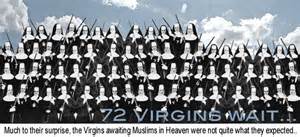
” Islamo Nazi’s are in for a big surprise!”
IMHO, I believe the biggest lie in practically all world religions is that there is “Life immediately after Death.” Muslims for example pattern much of what they believe after the Old Testament of the Bible and specifically the Torah. Christians and Jews each believe in the Resurrection of/from the Dead. What would be the point in believing in the resurrection of the dead if the dead were already alive in Heaven or as some believe in Paradise?
From what I have read Jesus Christ, the “monogenetic” son of God, is the only human being whose flesh was not allowed to rot in the grave, Sheol. Until the Administration of the Secret, all any believer had to look forward to after death was the resurrection of the Just; it was the Jews one, big hope. I think Martha said it best when speaking to Jesus of her dead husband Lazarus, “Martha saith unto him, I know that he shall rise again in the resurrection at the last day.”–John 11:24–KJV
In John 11, Lazarus had been dead 4 days and stunk to high heaven! But, why wasn’t he already in heaven or Paradise? Heck, he was one of Jesus’ best friends. If one of the malefactors crucified with Jesus was going to be in Paradise immediately after his death, surely Lazarus would be too, right? If someone who robbed people by threatening their lives was going to be in Paradise immediately following their death, certainly a righteous believer whom the Lord Jesus loved would be. But, the fact of the matter is, neither of them were. And no one who has ever drawn breath on this earth besides Jesus is!
1 Cor 15:20-23–But now is Christ risen from the dead, and become the firstfruits of them that slept (dead in the grave, Sheol). For since by man came death, by man came also the resurrection of the dead. For as in Adam all die, even so in Christ shall all be made alive. (When?) But every man in his own order: Christ the firstfruits; afterward they that are Christ’s at his coming. Aside from the Gathering Together, episunagoge, of the Church of God, the resurrection “at his coming” will be that of the Just. Luke 14:14–And thou shalt be blessed; for they cannot recompense thee: for thou shalt be recompensed at the resurrection of the just. KJV
Acts 24:14-15–But this I confess unto thee, that after the way which they call heresy, so worship I the God of my fathers, believing all things which are written in the law and in the prophets: and have hope toward God, which they themselves also allow, that there shall be a resurrection of the dead, both of the just and unjust. This means that someday everyone who has ever lived will raised from the dead, some to everlasting life and others to the 2nd death. Rev 20:5-6 says,
But the rest of the dead lived not again until the thousand years were finished. This is the first resurrection. Blessed and holy is he that hath part in the first resurrection (the Just): on such the second death hath no power, but they shall be priests of God and of Christ, and shall reign with him a thousand years. KJV
Islamic extremists who kill themselves while murdering others have nothing to look forward to but the second death. They will certainly be among those who are treated to a swim in a heated pool after the resurrection of the Unjust. Rev 20:12-14
And I saw the dead (not the living), small and great, stand before God; and the books were opened: and another book was opened, which is the book of life: and the dead were judged out of those things which were written in the books, according to their works. And the sea gave up the dead which were in it; and death and hell, sheol, delivered up the dead which were in them: and they were judged every man according to their works. And death and hell were cast into the lake of fire. This is the second death. And whosoever was not found written in the book of life was cast into the lake of fire. (Can you see where the dead are? They are not in heaven or paradise). The dead are in the sea or on land, in the grave, nowhere else.
Rev 21:8–But as for the cowardly, the faithless, the detestable, as for murderers, the sexually immoral, sorcerers, idolaters, and all liars, their portion will be in the lake that burns with fire and sulfur, which is the second death. ESV
Death is an enemy and always will be. Death will not be destroyed until after the Millennial Kingdom as you see above. We were not created to die, but to live forever. When we make Jesus, Lord and believe God, YHWH, raised him from the dead we will receive eternal life. After death, we will all sleep with our father’s, just like everyone else, but Jesus! God bless!

Part IV of the Apocalupsis of John, the Book called Revelation
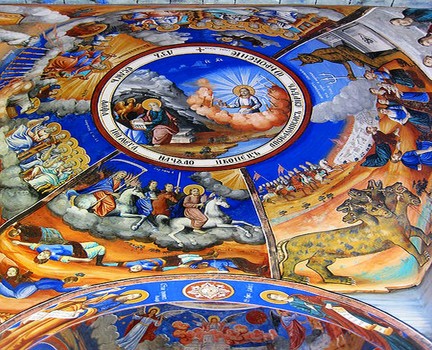
In the preceding 3 posts I have established beyond any doubt that the miscalled “churches” in The Apocalupsis of John are in reality assemblies or congregations of Jews, members of the Nation of Israel. To give you an example of how unsound some believers can be, a woman, whose blog I used to follow, said to me, “If Jesus called them churches, then that’s what they are!” Unfortunately Jesus has had nothing to do with how translators have chosen to translate most of the words in the Bible. Out of 17 Bible versions or translations in my PC Bible program only these 3 translate ecclesia properly:
Rev 1:4
John to the seven assemblies that [are] in Asia:
YLT- Young’s Literal Translation
Rev 1:4
4 John to the seven assemblies
Darby
Rev 1:4
4 John, to the seven assemblies that are in Asia:
WEB- World English Bible
If you are a serious workman of the Word or want to be you must invest in some PC Bible program or buy a lot of Bibles! On my way home from NY last Sunday by way of Chicago I had the opportunity to sit next to a young Jewish girl who had recently become a Christian. She was very well versed in the “mainstream” doctrines of Christianity. She was surprised to hear many things I had to say about beliefs she held and took a copious amount of notes on her phone. I was able to show her from the Scriptures (on her phone) passages which substantiated what I had to say, but she could not find one Scripture to substantiate anything she believed! Everything she believed hear-say and much of that was heresy!
She was even astonished to see from 1 Corinthians 10:32 that the apostle Paul established that there are only 3 types of people in the world; Jews, Gentiles and the Church of God. She was equally surprised to see these verses:
Gal 3:28-29
There is neither Jew nor Greek, there is neither bond nor free, there is neither male nor female: for ye are all one in Christ Jesus.
29 And if ye be Christ’s, then are ye Abraham’s seed, and heirs according to the promise.
KJV
She was insisting that she was a Jew for Jesus. What an absurd belief. I tried to explain to her that once a Jew or a Gentile became born again of the spirit of God by confessing Jesus as their Lord and believing God raised him from the dead, they became members of the Church of God. She could not let go of her ancestry and she could not understand how I could be of the seed of Abraham. She really imploded when I told her that Abraham was a Gentile and not a Jew!
Abram is first mentioned in Ge. 11:26; his name was changed to Abraham in Ge. 17:5. Jacob isn’t mentioned until Ge. 25:26 and his name was not changed to Israel until Ge. 32:28. The word Jew is not mentioned until the book of Esther and then it applied to a descendant of Judah. Abraham is called a Hebrew in Ge. 14:13 which means a descendant of Eber. Eber is first mentioned in Ge. 10:21. Eber lived 464 years; see Ge. 11:16.
I could go on and on, but the point you need to see is that the word Hebrew had nothing to do with Jews or Israel originally; that Israel did not exist in Ge. 11. Therefore Abraham could not have been a Jew, but rather a Gentile.
The most astonishing thing that this young Jew for Jesus had to say to me was that no one could be a Christian or a member of the Church of God without confessing and believing that Jesus was God incarnate. I asked where she got this from in the Scriptures and she did not know precisely. I showed her Romans 10:9 where it says to confess Jesus as Lord which she said means God, because God is the “Lord” God. I proceeded to show here in Acts 2:36 that God had bestowed His title as Lord upon Jesus. Jesus is my Lord, my master. Nowhere in the Pauline Epistles does it talk about the Lord God or the Lord our God. They show God as our Father and Jesus Christ as our Lord! Lord is used 241 times in the Epistles which are written directly to the Church of God and never is the title attached to God!
To the Jew God will always be the Lord; but to the Christian, Jesus is our Lord, not our God. Here is what Lord means, in case it is not clear yet:
NT:2962 kurios, kuriou, ho
he to whom a person or thing belongs, about which he has the power of deciding; master, lord
a. used universally, of the possessor and disposer of a thing, the owner Matt 20:8
b. kurios
is a title of honor, expressive of respect and reverence, with which servants salute their master, Matt 13:27; 25:20,22; Luke 13:8; 14:22, etc.;
c. this title is given:
to God, the ruler of the universe Matt 1:22 (OT, Gospels and Revelation)
to the Messiah; and that:
to the Messiah regarded universally: Luke 1:43
to Jesus as the Messiah, Acts 10:36
d. of Christ (In the Epistles)
(from Thayer’s Greek Lexicon, Electronic Database. Copyright © 2000, 2003, 2006 by Biblesoft, Inc. All rights reserved.)
Don’t be afraid to comment; I will not delete any comments but will publish all.
(More on Revelation in the next post).
Part I of the Kingdom of God and of Heaven
@ChristineCane posted a very interesting and challenging Tweet yesterday the 16th of September. (Her reputation precedes her in the Church as one of the most dynamic women dedicated to helping and empowering women to be all they can be for Christ). Here is the Tweet:
‘There’s no question: God is building His Kingdom on earth. The question you need to ask is, “How has He called me to help Him?”‘
The Kingdom of God, also known as the Kingdom of Heaven, is the Millennial Kingdom, when we (the born again believers since the Day of Pentecost). will reign with Christ Jesus, the King of kings, for 1,000 years. This is when the King from Heaven, the Lord Jesus, establishes his kingdom upon the earth in Jerusalem. This will not be accomplished until after the Battle of Armageddon. This is the theme Jesus preached about during his earthly ministry, but as yet has not come to fruition. 2 of Jesus’ disciples once posed a similar request:
Mark 10:35-37
And James and John, the sons of Zebedee, come unto him, saying, Master, we would that thou shouldest do for us whatsoever we shall desire.
36 And he said unto them, What would ye that I should do for you?
37 They said unto him, Grant unto us that we may sit, one on thy right hand, and the other on thy left hand, in thy glory.
KJV
Then, when they didn’t get the answer they wanted, they brought their mother to propose it for them!
Matt 20:20-21
Then came to him the mother of Zebedee’s children with her sons, worshipping him, and desiring a certain thing of him.
21 And he said unto her, What wilt thou? She saith unto him, Grant that these my two sons may sit, the one on thy right hand, and the other on the left, in thy kingdom.
KJV
Then we have several Scriptures concerning who will be the greatest and who will be the least in the Kingdom:
Matt 5:19
Whosoever therefore shall break one of these least commandments, and shall teach men so, he shall be called the least in the kingdom of heaven: but whosoever shall do and teach them, the same shall be called great in the kingdom of heaven.
Matt 18:1-4
At the same time came the disciples unto Jesus, saying, Who is the greatest in the kingdom of heaven?
2 And Jesus called a little child unto him, and set him in the midst of them,
3 And said, Verily I say unto you, Except ye be converted, and become as little children, ye shall not enter into the kingdom of heaven.
4 Whosoever therefore shall humble himself as this little child, the same is greatest in the kingdom of heaven.
KJV
KJV
Matt 8:11
And I say unto you, That many shall come from the east and west, and shall sit down with Abraham, and Isaac, and Jacob, in the kingdom of heaven.
KJV
Jesus believed this kingdom was imminent in Mark 1:15, saying, The time is fulfilled, and the kingdom of God is at hand: repent ye, and believe the gospel. Where are Abraham, and Isaac, and Jacob? Are they with us? Are we sitting down with them?
Is there still no question that “God is building His Kingdom on earth, now?”
For more on this subject see: http://thelivingtruthfellowship.org/jtltf/bible-teachings/articles-by-topc/administrations/41-in-the-kingdom-now

 Home of the Rightly Divided Word